
Power Purchase Agreements (PPAs): How to Go Solar with Zero Upfront Cost
For many businesses, the benefits of commercial solar are clear. Lower energy bills, greater energy security and improved sustainability all make solar PV an attractive long-term investment. However, the upfront capital required for a solar installation can sometimes delay or prevent projects from moving forward.
That's where a Power Purchase Agreement (PPA) offers an alternative.
A PPA solar solution allows businesses to benefit from renewable energy without purchasing the system outright. Instead of funding the installation themselves, organisations simply buy the electricity generated by the solar panels at an agreed rate—often significantly lower than grid electricity prices.
For businesses looking to improve sustainability while preserving cash flow, a PPA can make commercial solar accessible with zero upfront cost.
What Is a Power Purchase Agreement?
A Power Purchase Agreement is a form of solar financing that enables businesses to install commercial solar PV without making an initial capital investment.
Under a PPA, a third-party investor funds, owns and maintains the solar system installed on your premises.
Your business then purchases the electricity generated by the system through a long-term agreement at a fixed or agreed rate.
This means you benefit from lower-cost renewable electricity without the financial burden of purchasing or maintaining the equipment.
How Does a PPA Work?
The process is straightforward.
A solar provider assesses your site's suitability and designs a system based on your energy requirements. Once installed, the investor owns and maintains the equipment throughout the agreement.
Your business simply uses the electricity generated on-site and pays only for the energy consumed.
Because the electricity is generated where it is used, businesses can reduce their reliance on grid electricity while benefiting from more predictable energy costs.
Why Businesses Choose PPA Solar
One of the biggest advantages of PPA solar is removing the financial barrier to adopting renewable energy.
Instead of making a large capital investment, businesses can begin reducing electricity costs immediately.
Key benefits include:
Zero upfront installation costs
Lower electricity prices than the grid
Predictable long-term energy costs
No maintenance responsibility
Immediate carbon reduction
Improved cash flow
This allows businesses to invest capital elsewhere while still benefiting from renewable energy.
Strengthen Energy Security
Energy price volatility has highlighted the importance of reducing reliance on the grid.
Generating electricity on-site through a PPA provides greater control over energy costs while improving operational resilience.
Although businesses still remain connected to the grid, generating a significant proportion of their own electricity reduces exposure to fluctuating wholesale energy prices.
Support ESG and Sustainability Goals
A PPA is more than a financial solution—it also supports wider sustainability objectives.
Using renewable electricity generated on-site helps businesses reduce carbon emissions and strengthen their ESG performance without major capital expenditure.
For organisations working towards Net Zero or meeting customer sustainability requirements, a PPA provides a practical route to achieving measurable environmental improvements.
Is a PPA Right for Your Business?
Power Purchase Agreements are particularly attractive for businesses that:
Want to reduce energy costs without investing capital
Have suitable roof space or available land
Consume significant electricity during the day
Want to improve ESG performance
Are working towards Net Zero targets
Commercial offices, manufacturers, warehouses, agricultural businesses, schools and logistics facilities can all benefit from this approach.
PPA vs Purchasing a Solar System
Both options offer significant long-term benefits, but the right choice depends on your business objectives.
Purchasing a solar PV system outright generally delivers the greatest long-term financial return because the business owns the asset and benefits from all future energy savings.
A PPA, however, removes the initial investment and operational responsibility, making renewable energy accessible immediately.
For many organisations, preserving capital while reducing energy costs makes a PPA an attractive alternative.
Renewable Energy Funding Made Simple
Businesses often assume renewable energy requires significant upfront investment.
Modern renewable energy funding options mean this is no longer the case.
Whether through a Power Purchase Agreement, finance packages or direct ownership, there are now flexible ways to adopt commercial solar that suit different financial strategies.
The key is selecting the funding model that aligns with your business goals, cash flow and long-term plans.
Partner with Blue Renewables
At Blue Renewables, we help businesses explore the most effective route into commercial solar.
Whether you're considering a PPA solar agreement, flexible solar financing, or purchasing your own system, our experienced team will guide you through every stage—from feasibility studies and system design to installation and ongoing support.
We'll help you find the right renewable energy funding solution to reduce energy costs, strengthen sustainability and futureproof your business.
To find out more, contact Blue Renewables today at info@bluerenewables.co.uk or call 01825 598450.
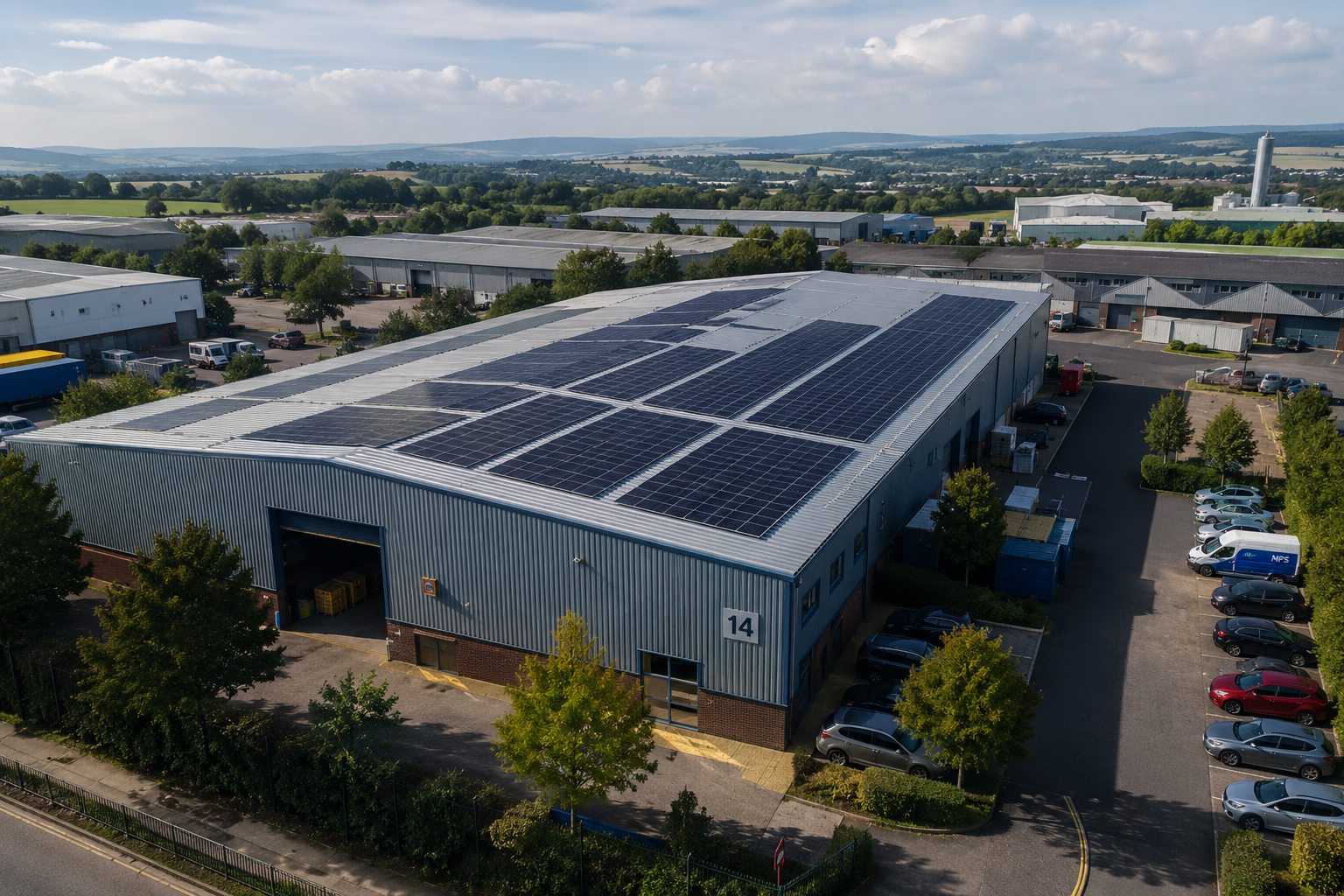
Commercial warehouse in a UK industrial estate with rooftop solar panels, demonstrating how business solar installations reduce energy costs, improve energy efficiency, strengthen energy security, and support long-term sustainability and Net Zero goals.