Farmers Guide: How Farms can Benefit from Diversification with Solar
We’re proud to share that Blue Renewables has recently been featured in Farmers Guide with a detailed article exploring how solar panels and battery storage are becoming a practical and profitable diversification strategy for UK farms.
Titled “From Field to Future: Solar and Battery Storage as a Practical Diversification Strategy,” the article highlights how renewable energy is helping agricultural businesses respond to rising costs, tightening margins, and increasing pressure to futureproof operations.
As farms across the UK reassess how effectively every acre is performing, renewable energy is becoming an increasingly relevant part of the conversation.
Turning Marginal Land Into Long-Term Value
The Farmers Guide feature explores how lower-grade or underperforming land can be repurposed to deliver consistent, long-term income through solar installations.
Rather than relying solely on traditional cropping — often exposed to fluctuating commodity prices and input costs — solar offers a more predictable financial return over decades.
As highlighted in the article:
“Ground-mounted solar offers an alternative use… land can generate predictable income over 25 to 40 years.”
This shift allows farms to strengthen overall business stability while making better use of less productive areas.
Supporting, Not Replacing, Agriculture
A key message throughout the article is that renewable energy does not replace farming — it supports it.
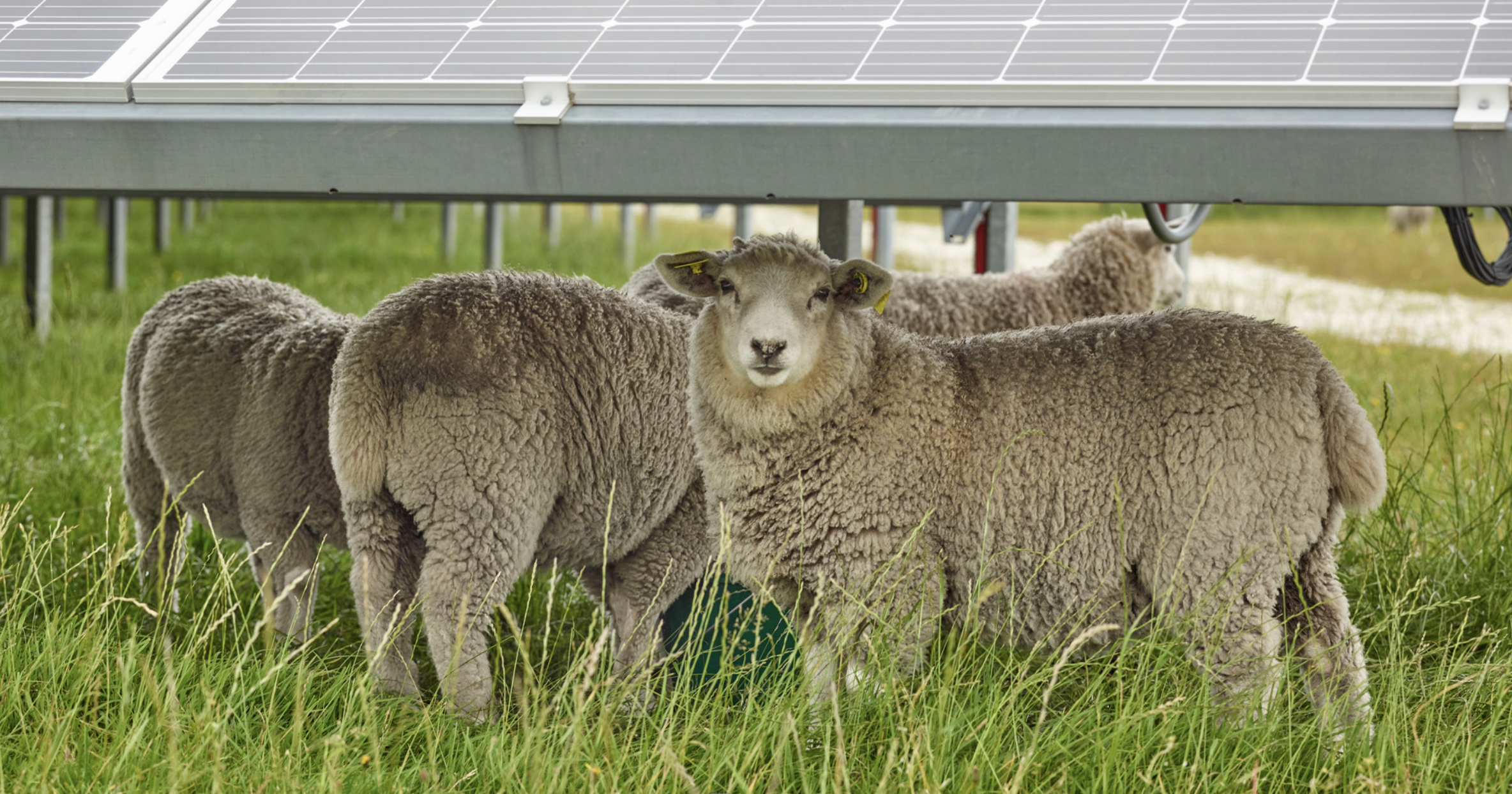
Modern solar projects are designed to integrate with agricultural activity, from sheep grazing beneath panels to biodiversity enhancements that complement land stewardship goals.
Adrian Williams, Business Manager at Blue Renewables, explains:
“For many farmers, solar is not about replacing agriculture. It is about reinforcing the core business.”
This approach ensures that diversification strengthens the farm as a whole, rather than competing with existing operations.
Reducing Costs and Increasing Resilience
Beyond generating income, the article also highlights the growing importance of reducing operational costs — particularly energy.
For farms with high electricity demand, solar can supply a significant portion of on-site power, helping to reduce reliance on the grid and protect against rising energy prices.
Battery storage further enhances this by allowing energy to be stored and used when it is most valuable.
As the article notes, renewable energy is not just about sustainability — it is about resilience.
A Long-Term Investment in the Future of Farming
The Farmers Guide feature also emphasises the long-term nature of renewable energy investments.
Solar and battery systems provide stable, predictable performance over decades, helping farms build resilience against market volatility and policy changes.
As Adrian Williams summarises:
“When farmers consider solar, they should view it as infrastructure. It is an investment that reduces exposure to energy price shocks and delivers reliable returns over the long term.”
From Feasibility to Delivery
The article also outlines the importance of careful planning and the role of experienced partners in delivering successful projects.
At Blue Renewables, we support farms at every stage — from feasibility studies and grid applications through to design, installation, and long-term maintenance.
Our goal is to ensure every project is tailored to the farm’s needs, delivering both financial and operational value for years to come.
Read the Full Article
This feature provides a detailed look at how renewable energy is shaping the future of agricultural diversification — and how solar and battery storage can play a practical role in today’s farming landscape.
Read the full article on the Farmers Guide website to explore how solar could support your farm or landholding.
If you’d like to discuss how renewable energy could work for your business, speak to our team today.
Get in touch today: info@bluerenewables.co.uk or call 01825 598450.